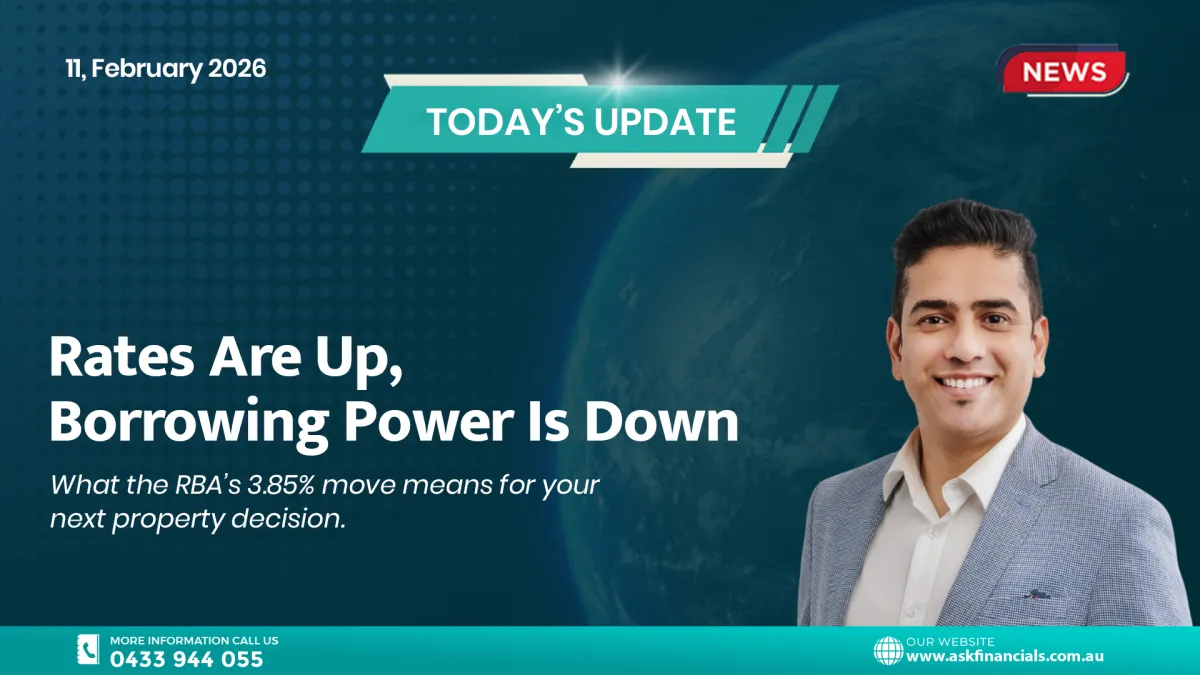
RBA’s February Rate Rise and Borrowing Costs in 2026
RBA Lifts Rates Again: What the Latest Move Means for Borrowers
On 3 February, the Reserve Bank lifted Australia’s cash rate by 25 basis points to 3.85%, the first rate rise in over two years. Governor Michele Bullock warned inflationary pressures remain high, and policymakers signalled further hikes may be needed. In fact, market pricing now implies about two rate rises in 2026. From a mortgage broker’s viewpoint, this means borrowing costs are set to stay higher for longer. As Ask Financials clients know, higher official rates directly translate into higher home loan rates and tighter budgets.

This policy shift comes amid still-strong credit growth. The RBA notes total lending growth has “picked up sharply” and is above its long-run average. Home lending, especially to investors, is surging, even as banks largely keep underwriting criteria unchanged. In short, lenders are still competing for borrowers, but serviceability requirements and stress tests are tightening gradually. Below, we explain how these trends affect borrowing power and what strategies borrowers can use to prepare.
Borrowing Power and Repayments
Higher rates immediately squeeze purchasing power. Analysts estimate that, after this RBA move, an average borrower can now finance roughly $12,000 less than before. If another 25bp hike comes (as many forecast), the hit could double. In practice, this means smaller loan approvals and bigger monthly repayments. For example, standard loans in Sydney now see repayments ~$200 higher per month than before the hike. In every city, the extra cost is in the hundreds each month, putting pressure on hip pockets.
Key impacts on borrowers:
Less loan capacity – Roughly $10–15K less borrowing power for a typical wage earner.
Higher repayments – Monthly mortgage bills are near historic highs (around 10% of income).
Buffer planning – With a shrinking headroom, it’s critical to build interest buffers (e.g. maintain offset/redraw balances) and review budgets.
Credit Growth and Lending Conditions
Despite the higher rates, credit is still growing fast. The RBA notes total loans are expanding faster than GDP, far above post-Global-Financial-Crisis norms. In particular, investor lending is booming – credit to property investors is rising at the fastest pace since 2015. In other words, investors (often using interest-only loans) are taking out more debt, even as owner-occupier borrowing rises more slowly. This reflects strong housing demand and competition among lenders.
Key credit and market facts:
Above-average credit growth – Loans to households and businesses are rising quickly.
Investor loans leading – Investor lending is at the highest growth rate in years, reflecting strong property investment demand.
Stable lending rules – Banks’ serviceability tests and credit policies have been mostly unchanged.
At Ask Financials, we guide clients through exactly these questions. We look at your situation – income changes, savings buffers, and investment goals to tailor the loan strategy. For example, if inflation stays higher than expected, banks might boost their service buffers (the extra percentage points they stress-test above the actual rate). As one industry observer notes, “lenders reaching their DTI [debt-to-income] quota may become more conservative with income assessments, add-backs and servicing buffers, even if serviceability tests are met”. That’s why we always factor in an extra safety margin when approving loans.
Take Action Now with Ask Financials
This is a time to be informed and proactive. If you’re planning to buy or refinance, talk to a broker now – don’t wait for each new rate decision to surprise you. Ask Financials can help review your borrowing power, find the most competitive loan, and set up buffers so your repayments stay manageable.
Ready to make your move? For tailored advice or to discuss your buying strategy, contact Ask Financials. You can call us at 0433 944 055 or book a free consultation today. We’re here to help you navigate the changing market and secure the right home loan for you.
Follow Ask Financials on Instagram and LinkedIn for more updates and tips.
