
Australia Housing Market: Prices Up 10%, Supply Tight
Market Snapshot: Rising Prices and Tight Supply
The latest NAB Housing Monitor (Mar 2026) shows that dwelling prices are climbing again. Combined capital city values have jumped roughly 9–10% year-on-year. In February, they rose another 0.6%. Growth has been strongest in Perth, Brisbane and Darwin, with those markets up roughly 20–30% annualised, while Sydney and Melbourne have cooled slightly. With the median home price around $900K in city markets, buyers now need bigger deposits and larger loans. Supply is very tight: vacancy rates are near 1.6% (record lows), and advertised rents are rising about 6% on a 6-month basis. These pressures – combined with building delays and labour shortages – mean strong competition and upward pressure on prices for now.
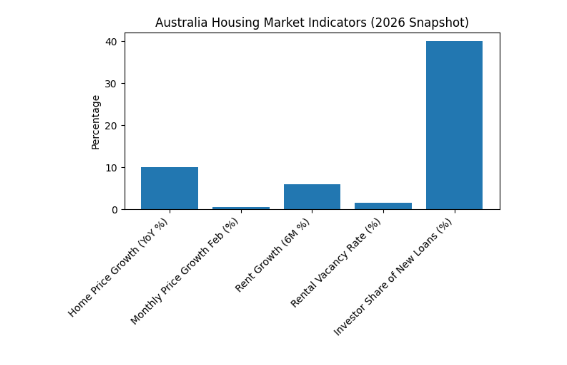
The rental market’s tightness is a key story. With vacancy at just 1.6% and rents rising in most cities, investors are back in force. High rents (nearly 6% annualised growth) make investment properties more attractive, driving a surge in landlord borrowing. Recent data show investors now account for a large share of new loans. In fact, Australians took out record investment loans in late 2025 – roughly 40% of all new mortgages – as they chase yield. With strong investor interest, loan commitments for new housing are continuing up fast: NAB reported a large increase in new housing loan commitments late in 2025, primarily due to investors, but also due to owner occupiers.
What This Means for Borrowers
Rapid price gains and tight credit make borrowing challenging. As one broker explains, “larger loans…point to more aggressive borrowing” in a competitive market. Buyers may find their borrowing capacity hit by high prices and interest rates – you’ll need a bigger deposit and higher income to meet lender tests. First-home buyers especially face a “narrow margin for hesitation” despite government support schemes.
Plan Carefully: With the market moving the way it is, going in without a clear budget is a real risk. Get your pre-approval sorted early, know exactly what you can borrow, and use a loan calculator to set a number you're actually comfortable with. Talking to an adviser helps line up what you expect with what you can genuinely afford.
Borrowing Power: House prices are up around 10%, which means deposits are bigger and monthly repayments are higher than they were even a year ago. Check your borrowing power before you start looking, not after you've fallen in love with a property.
Loan Demand: A lot of people are applying for loans right now, which means the process is taking longer than usual. Get your application in early, and think about whether fixing part of your rate or using an offset account makes sense for your situation to keep interest costs under control.
Investor Outlook: Low vacancies and rising rents (see 1.6% vacancy) are fuelling demand. Investors should lock in funding now while yields stay high.
Housing Supply: With new builds still subdued, prices may keep rising. Potential lending opportunities from hotspots growing (Perth, Brisbane, Darwin).
Loan strategy: Loans need to be structured to protect equity. Only a small to mid-range % of total new loans have been written with a risky high level of LVR. Maintain a buffer zone and focus on long-term comfort.
Expert Help and Next Steps
In this fast-moving market, advice from a mortgage broker is vital. We at ASK Financials help you navigate these changes. Our experts can run calculators and share strategies to explore our tools and guides. Whether you’re buying a first home or investing, we’ll tailor a loan structure to your situation.
Stay on top of market trends with ASK Financials – we’re just a call or click away. Contact us 0433 944 055 or book a free consultation. For daily insights and tips, follow our team on Instagram and LinkedIn to see how we can help you secure your finances and grow wealth in this market.
