
Australia Housing Market 2026: Growth Slows 2.1%
Australia's Housing Market in Q1 2026: What Every Borrower Needs to Know Right Now
The latest Cotality Home Value Index for Q1 2026 is out, and if you're planning to buy, refinance, or invest this year, there's a lot to unpack. The numbers tell a story that's equal parts opportunity and caution, and if you're not paying attention, you could easily make the wrong move.
Source : CoreLogic (Cotality) Home Value Index Q1 2026, RBA, ABS Rental Data
The Headline: Growth Is Slowing, But It's Not the Whole Picture
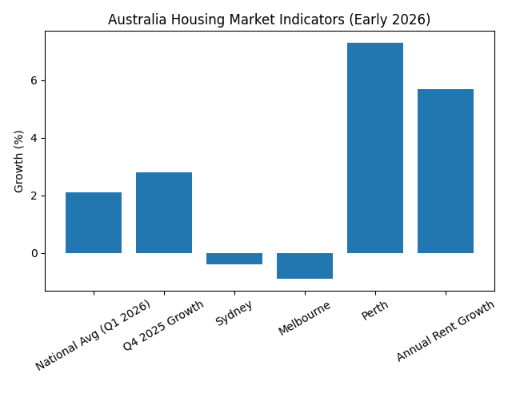
Nationally, home values grew 2.1% in Q1 2026, according to Cotality's April 2026 Home Value Index. That sounds healthy enough on the surface. But compare it to the 2.8% growth we saw in Q4 last year, and it's clear the pace is easing. More importantly, what's happening differs wildly from one city to the next.
This isn't one housing market anymore. It's two.
Sydney and Melbourne Are Softening
Since the end of November 2025, Sydney values are down 0.4%, and Melbourne is down 0.9%. Both cities are seeing more stock hitting the market, slower auction clearance rates, and buyers with a bit more breathing room at the negotiating table. If you've been sitting on the sidelines in these cities, conditions are gradually shifting in your favour but only if your finance is sorted before you move.
Perth, Brisbane, and Adelaide Are a Different Story
While Sydney and Melbourne cool, Perth is running hot. Values jumped 7.3% in the March quarter alone, adding roughly $69,000 to the median dwelling value in three months. Brisbane and Adelaide are also hitting record highs. Supply in Perth is sitting about 40% below the five-year average, and demand isn't letting up.
For buyers in these markets, waiting could genuinely cost you. Competition is intense, and you need to go in with a pre-approval locked in and a clear understanding of your borrowing limit, not an estimate, the actual number.
The Serviceability Problem Everyone Is Ignoring
Here's what a lot of buyers don't realise: even if you can afford today's repayments, the bank needs to see that you could handle a rate roughly 3% higher. With the RBA cash rate sitting at 4.10%, most lenders are assessing your loan at close to 9%. That's not a small hurdle.
This serviceability buffer is one of the key reasons we're seeing demand shift toward lower-priced properties. If you're not sure what your real borrowing capacity looks like right now, you can use the Borrowing Power Calculator on our website as a starting point. But for anything more than a rough estimate, get in touch; there's a lot more to it than a number.
Rent Is Rising Too, and It's Not Helping
Nationally, the rental vacancy rate is sitting at just 1.6%, well below the decade average of 2.5%. Rent has grown 5.7% over the past year, adding about $37 a week to the median rental rate. For renters trying to save a deposit at the same time, that's a real squeeze.
Markets like these reward the prepared. Whether you're buying for the first time, upgrading, or building a portfolio, having the right loan structure in place is what separates the buyers who win from the ones who miss out.
For tailored advice or to discuss your situation, reach out to the team at ASK Financials. Call us on 0433 944 055 or book a free consultation today. Follow us on Instagram and LinkedIn for regular updates on the Australian property market.
