
Australia Property Prices 2026–2030: What Borrowers Must Know
$1.1M to $953K by 2030: The Property Forecast Every Australian Borrower Needs to See
There's a headline doing the rounds that's got a lot of Australians talking, and honestly, a little anxious.
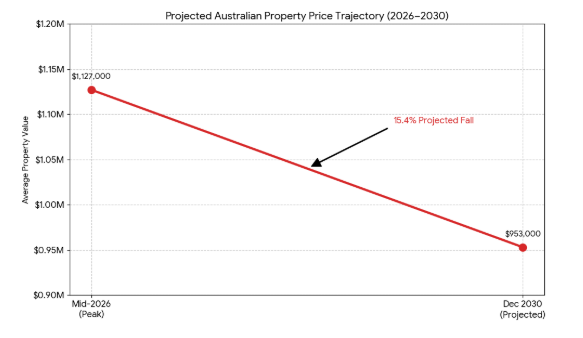
New research from Money.com.au, put together by Primara Research, suggests that Australian dwelling prices could fall by as much as 15.4% from their peak by the end of 2030. Under their "most probable" scenario, the national average home value climbs to around $1.127 million by mid-2026, then slides back to roughly $953,000 by December 2030.
That's not a small number. And if you've bought, or are thinking about buying, in the last couple of years, it's worth understanding what's actually going on.
But before you panic, let's break it down simply.
What's Actually Driving This?
A few things are at play here, and none of them is new. They've been building for a while.
Borrowing capacity has already dropped. Most borrowers today can access around 10% less than they could two years ago. Lenders are stress-testing at higher rates, which means even if you earn the same salary, the amount a bank will lend you has quietly shrunk. A lot of people don't realise this until they sit down and run the actual numbers.
First home buyers are feeling it most. Entry-level properties have seen price growth of around 6.7% in the six months following the expanded first home buyer scheme, nearly double the 3.6% recorded for properties above the price caps. If you're a first home buyer or looking to refinance into a better deal, the window to act before further rate movement narrows your options is worth taking seriously.
Supply is still a serious problem. Industry body forecasts point to a shortfall of around 380,000 new dwellings by 2030, with new construction down roughly 11% in 2026 alone due to rising build costs and labour shortages. This is what's keeping a floor under prices, even as borrowing gets harder. Demand hasn't gone away; it just can't get finance as easily.
Will prices fall by 2030? Maybe. The research points that way under certain conditions, more rate hikes, higher unemployment, and more supply coming online. But there's also a scenario where strong population growth, chronic undersupply and eventual rate cuts push values back toward $1.3 million.
The research makes one thing clear: nobody can predict exactly where prices will land. What drives the market up or down isn't some mystery; it comes down to how many homes are available and whether people can afford to borrow. Those two things are shifting right now, and that's what every borrower needs to be watching.
Nobody knows for certain. What we do know is this: the decisions you make now about how you structure your finances, which lender you go with, and how you manage repayment risk will matter a lot more than trying to pick the perfect entry point.
Ready to Make Your Move?
If you want tailored advice on your situation, buying, investing, or refinancing, Ask Financials is here to help. Either call us at 0433 944 055 or book a free consultation. Follow us for regular property and finance updates on Instagram and LinkedIn
