RBA 4.10% Rate Rise Hits Borrowing Power Australia
Supply Is Shrinking. Buyers Who Know This Are Already Ahead
The RBA recently lifted the cash rate by 0.25% to 4.10% to rein in stubborn inflation. In practical terms, every homebuyer will feel the pinch: mortgages cost more, and banks apply a 3% serviceability buffer. In other words, a 4.1% interest rate is treated as roughly 7.1% when assessing borrowing power. That means most borrowers can afford smaller loans. As Ask Financials brokers, we stress that higher rates do help curb inflation, but they also make it harder to finance new homes.
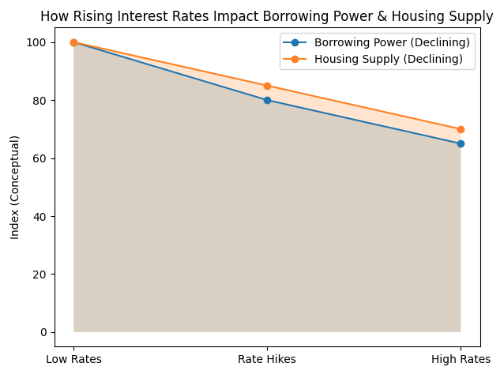
Higher rates and rising costs are already hammering housing supply. Even before the latest hike, building costs had surged. RBA data shows construction costs jumped almost 40% from 2019–2024, partly due to COVID disruptions. Now, higher interest and tighter credit tighten the screw further. The Housing Industry Association notes this will cut into home building: “higher interest rates also increase the cost of delivering new homes and make it more difficult to finance new housing projects”. In fact, HIA warns that Australia built about 61,000 fewer new homes in 2024–25 than needed to stay on track for the 1.2 million-home target.
With fewer homes coming to market, the supply squeeze intensifies. Less new stock means more competition for existing homes. As HIA’s Tim Reardon points out, when supply is constrained, “competition for existing housing increases, pushing prices and rents higher”. In other words, tight supply doesn’t lower prices – it lifts them. Rental demand is especially strong, putting upward pressure on rents. That means buyers need to be prepared for higher purchase prices and bills. For property investors, there may be an opportunity in rising rents (and tax incentives still apply), but even here the risk of policy changes looms. Reardon cautions that adding taxes on investors would worsen the shortage, since it “would further discourage the investment needed to finance new housing projects”. As analysts note, squeezing investors won’t make homes appear; it only “increases the cost of supplying homes… fewer new homes [are] delivered to market,” pushing rents and prices up.
What this means for buyers
For homebuyers, the combination of higher rates and tight supply means being strategic is critical. Your borrowing power is lower than it was a year ago; even a small rate rise can cut how much you can borrow or afford. At Ask Financials, we often find that even clients with a good deposit have smaller approved loans, simply because banks must test loans as if rates were much higher. That’s why it’s vital to focus on loan structure and careful budgeting. A broker can help you compare fixed vs variable options, use offset accounts or redraw facilities to reduce interest costs, or split loan portions to suit your cash flow. We also look across dozens of lenders to find better terms. In fact, our clients tell us they appreciate how we “structure loans to help retain borrowing capacity” and “find solutions for everything” from maximum loan size to lower repayments.
Ready to make your move? For tailored advice or to discuss your buying strategy, talk to Ask Financials, we’re mortgage brokers helping Australians find and fund the right property. Give us a call on
0433 944 055 or book a free consultation today to get started. Ask Financials is here to guide you through these tough markets and help secure your home with confidence.
Follow Ask Financials on Instagram and LinkedIn for more updates and tips.
