

Offset Accounts in 2026: Are They Still Worth It With Higher Rates? | ASK Financials
Offset Accounts in 2026 – Are They Still Worth It With Higher Rates?
In 2026, the mortgage market in Australia is being shaped by higher interest rates in Australia, as well as tighter lending standards for borrowers. As borrowers bear the burden of rising payments, offset accounts have returned to the limelight as an ingenious home loan strategy.
The operation of offset home loans has become a priority for many Australians dealing with home loans, mortgage repayments, and long-term financial planning. This blog explains how offset accounts work, their advantages in 2026, and the extent to which they can be considered an effective borrowing tool in today’s market.
What Is an Offset Account, and How Does It Work?
An offset account is a transaction account that is connected to your home loan. The balance in your offset account helps to lower the rate of interest you are charged on your mortgage, instead of receiving interest like in a regular savings account.
To illustrate, if you have a $500,000 home loan and an offset account of $50,000, then the interest will be applied to $450,000.
This arrangement enables borrowers to save on the overall interest and pay off sooner. In the long term, it may result in huge home loan interest savings and faster debt repayment.
The offset accounts offer a more effective way to reduce mortgage interest than regular savings accounts.
Why have offset accounts gained popularity in Australia
During the period of low interest rates, the use of offset accounts became very popular since any dollar saved had a direct correlation with the reduction of the cost of borrowing.
Balances as small as an offset account may result in realised savings on the mortgage interest rates. A large number of homeowners have embraced the use of offset facilities in their financial planning strategy.
However, as interest rates have been rising since 2022 and are expected to continue to be high through 2025 and 2026, borrowers are now re-evaluating the value that the offset home loan may continue to bring over other alternatives.
The Impact of Higher Interest Rates in 2026
The Reserve Bank of Australia has increased the cash rate compared to past years in order to control inflation and economic stability.
As a result:
There is a growth in mortgage repayments.
The ability to borrow has been constrained.
Lending standards have become stricter.
The value of interest savings by use of offset accounts has increased.
Contrary to conventional savings products, the interest on offset accounts is 100% savings, since each dollar will lower your loan balance.
In a high-interest environment, having money in an offset account will earn more returns than most savings products, which makes it an effective home loan management tool in 2026.
Offset Account vs Extra Repayment: Which Is Better?
Other borrowers choose to repay their loans plus additional amounts rather than maintaining money in an offset account.
Here’s the difference:
Extra Repayments: Pay down your principal and interest at a faster rate, but the money is locked away and more difficult to get.
Offset Account: Has your money available to use in daily life and, at the same time, lowers the amount of interest you pay.
Hence, in a high-rate environment such as 2026, offset accounts remain flexible and do not compromise on interest savings, particularly for borrowers who have to access their cash immediately.
The choice between these two options depends on cash flow management, lifestyle needs, and long-term property finance objectives.
Are Offset Accounts Still Worth It in 2026?
The answer to this question is yes; to many borrowers, they still are.
Offset is particularly helpful when it comes to:
Owners of good savings behaviour.
Unstable-income borrowers.
Financially flexible professionals.
Investors who deal with more than one property.
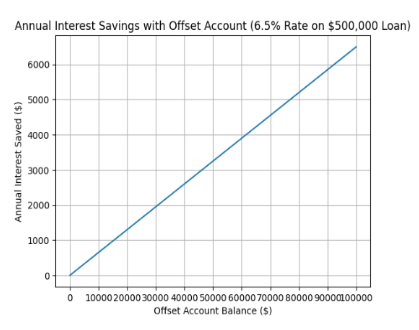
Offset benefits are more apparent with increased interest rates. For example, by keeping a balance of $50,000 in an offset account with an interest rate of 6.5 per cent, one is able to save about $3,250 per year on interest.
These savings make offset home loan to be one of the most effective instruments for minimising mortgage costs in 2026.
When Offset Accounts May Not Be Suitable
Offset accounts need not fit everyone.
They are not as effective in:
Borrowers have low savings.
Individuals who have difficulties in creating balance.
Fixed-rate loans generally do not offer a full offset feature.
Short-term borrowers
In these situations, it can be more viable to refinance, pay more or select the less sophisticated forms of loans.
It is possible to determine the best approach with the help of a professional mortgage broker consultation.
How ASK Financials Helps Borrowers in 2026
At ASK Financials, we help Australians structure home loans that align with their financial position and long-term goals.
The decision to go with an offset account, redraw facility or refinancing option can be a long and arduous one – particularly in a high-rate market.
Our team evaluates:
Income and expenses
Borrowing capacity
Savings behaviour
Financial goals in the long term
We also offer personalised advice on offset home loan suitability, reduction strategies, and mortgage optimisation.
ASK Financials also assists with:
Loan reviews
Interest cost analysis
Cash flow planning
Intelligent refinancing services.
We serve the objective of helping clients to maximise their savings and still remain financially safe.
Read More: Why Use a Broker?
Final Thoughts: Are Offset Accounts Still Worth It?
Offset accounts will remain an effective financial instrument for borrowers with regular savings and long-term objectives in 2026.
They enable homeowners to reduce mortgage interest, retain liquidity, and enhance the performance of the entire loan without compromising on flexibility.
The offset accounts in a high-interest environment enable Australians to ensure that their funds continue working more effectively as they deal with increasing repayments.
ASK Financials is on Instagram to give tips on buying a home and updates on rates.
Connect with us on LinkedIn for professional finance insights.
Like us on Facebook to get property and personal finance updates.
Book a free consultation with ASK Financials today and receive personalised advice aligned with your 2026 financial goals.