

Educational / Investor-focused angle SMSF Property Loans: Risks, Rewards, and Rules Every Investor Must Know
Property investment has long been a cornerstone of wealth creation for Australians, but for those with a Self-Managed Super Fund (SMSF), it basically offers a unique and powerful avenue to construct a robust retirement portfolio. Investing in property through an SMSF can provide significant tax advantages and the potential for long-term capital growth and rental income too. Indeed, this strategy is not without its complexities. It requires a clear understanding of the ATO’s strict rules and careful money management. As a strategic partner in this journey, ASK Financials provides the expertise needed to navigate this landscape, making certain your investment decisions align with your long-term financial goals.
The Allure of SMSF Property Investment
For many investors, the prospect of using their superannuation to acquire a tangible asset like property is a compelling one. Unlike traditional investments, which can feel abstract, property provides a sense of control as well as stability.
1. Tax-Effective Wealth Building
SMSF property investment offers a highly efficient tax structure. Rental income is taxed at a concessional 15%, dropping to 0% in the pension phase. Consequently, any capital gains from a long-term property sale (held for over 12 months) are nearly taxed at just 10% in the accumulation phase and are entirely exempt in the pension phase. This makes it an incredibly powerful tool for long-term wealth accumulation.
2. Strategic Leverage and Diversification
By using an SMSF loan, you can coherently leverage your super balance to acquire a property of greater value than your available cash, accelerating the growth of your retirement savings. This proficient strategy also provides a crucial opportunity to diversify your portfolio, reducing reliance on traditional assets, including stocks and bonds, and providing a hedge against market volatility.
The Pitfalls and Perils Every Investor Must Heed
While the rewards are clear, the risks of SMSF property investment cannot be understated in any way. Without proper due diligence and proficient advice, investors can find themselves in a precarious position. The most critical aspect of an SMSF property loan is the Limited Recourse Borrowing Arrangement (LRBA). This is one of the unique legal structures where the loan's recourse is strictly limited to the property itself. In the event of a default, the lender is permitted to confiscate only the property contained within the separate bare trust; they cannot touch any other assets within your SMSF.
Key Risks to Consider:
Cash Flow Vulnerability: A property investment is not a passive one. It strictly requires a steady stream of income to cover loan repayments, property management fees, maintenance, and insurance. A prolonged vacancy period or unexpected expenses can quickly create a cash flow deficit, putting the fund at risk of default.
Rising Interest Rates: Most SMSF loans are subject to variable interest rates, simply making them susceptible to market fluctuations. A sudden increase in rates can significantly raise your repayment obligations, straining the fund's liquidity.
Property Market Downturns: A fall in property values can impact your fund's overall net worth and reduce the equity you hold, potentially making refinancing or managing the loan more difficult.
Understanding the Rules: The ATO's Strict Guidelines
The Australian Taxation Office (ATO) imposes quite stringent rules to ensure SMSFs are used solely for the purpose of providing retirement benefits to their members. This is known as the "Sole Purpose Test," and it is the golden rule of SMSF investment.
Key compliance rules for SMSF property loans include:
The property cannot be acquired from or sold to a related party.
A member of the fund or a related party cannot live in, use, or rent the property.
All transactions, from acquisition to ongoing management, must be conducted on a strict arm's-length basis.
The property must be held in a separate trust, known as a bare trust or custodian trust, and the LRBA must be structured correctly from the outset.
These rules are non-negotiable. Any type of breach can lead to severe penalties, including fines, disqualification of trustees, and even the fund being made non-complying, which could result in a tax rate of 45% on all fund assets.
Statistical Insights: The Australian SMSF Property Landscape
According to data from the Australian Taxation Office (ATO), the SMSF sector continues to show robust growth as well as a strong appetite for direct property investment.
Key SMSF Statistics:
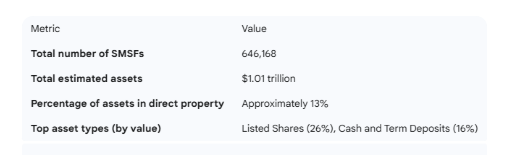
Source: Australian Taxation Office (ATO)
This data highlights a growing trend among Australians to use their superannuation to invest in real assets. As of March 2025, the total assets held by SMSFs had surpassed $1 trillion, with direct property holding a significant, though not dominant, position. This diversification strategy reflects the aspirations of investors to create a well-rounded portfolio that encompasses real estate.
Final Thoughts: Your Partner in Informed Investment
SMSF property lending can be an excellent strategy for building long-term wealth, but it demands careful planning, a clear understanding of the rules, and a keen awareness of the risks involved. At ASK Financials, we don't just get you a loan; we empower you with the knowledge and advice to build a future. We are the go-to team for your ambitions, strictly offering personalized financial solutions and a transparent, hassle-free process.
Ready to Take the Next Step? Call now at 0433-944-055 or book your free consultation call to gain the profound professional insights you need to build your financial legacy with confidence.